<b>[Column by Seol San Choi Jae-eun]</b>
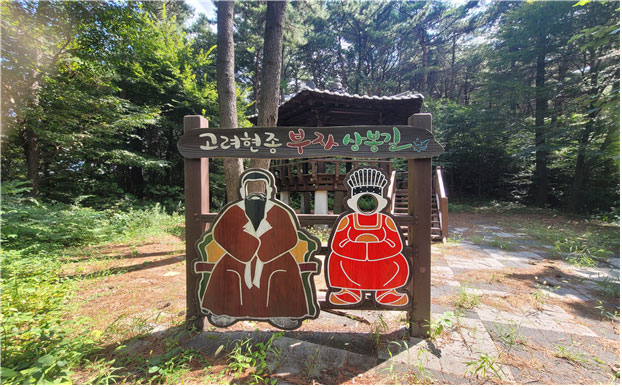
A road has been constructed from Nenghwa Village in Sanam-myeon, Sacheon-si, Gyeongsangnam-do to Baebangsa Temple, continuing on to the "Buja Sangbong Road" of Goryeo Hyeonjong. Nenghwa Village is the place where Goryeo Hyeonjong's father, Wang Wook, was exiled.
Wang Wook is the eighth son of Goryeo Taejo Wang Geon. However, Wang Wook, the seventh son, had a son named Sun through a secret relationship with Queen Heonjeong, the widow of the fifth king, King Gyeongjong. Thus, Wang Sun was a posthumous child. His mother, Queen Heonjeong Hwangbo, gave birth to her son and passed away immediately. Due to the fact of the secret relationship, Wang Sun was exiled to the distant land of Sacheon before he was even born.
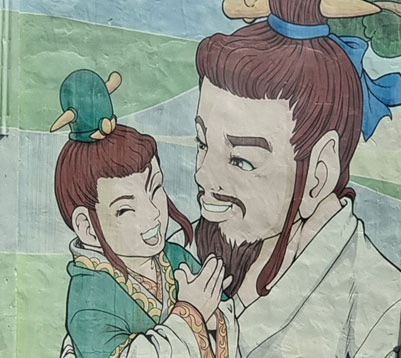
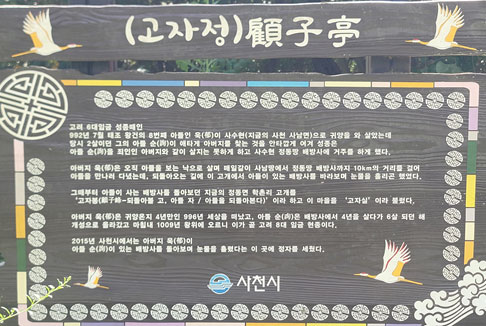
Upon seeing the innocent face of his son, Wang couldn't bear to kill him and sent him to Baebangsa in Sacheon, his father's place of exile. Wang Wook traveled over 20 li from Nenghwa Village to Baebangsa in the morning and returned by evening to see his son, who he named Gujabong, meaning the peak where the son looks back at the father.
Wang Wook was exiled in 992, the same year Wang Sun was born. Later, Wang Wook made a significant decision. Feeling that the land of Guryongdong was his auspicious place, he left a will to be buried there and took his own life. He requested to be buried upside down, and 13 years later, in 1009, his wish was fulfilled when his son Wang Sun ascended to the throne as the eighth king of Goryeo, known as Hyeonjong. He was praised as a king who not only led the country to victory in wars against the Khitan but also reformed the country's institutions, laying the foundation for prosperity that even the historians couldn't criticize.
Afterward, Wang Sun honored his father as Anjong and moved the burial site of Guryongdong to Gae-seong, calling it Geonreung. Through the reversal of Wang Wook's burial at Guryongdong, his son became king, overcame national crises, and turned Goryeo into a powerful nation. The descendants of Anjong and Hyeonjong continued to reign as kings, leading Goryeo to a period of prosperity and peace for 130 years, up to the 17th king, Injong, truly a remarkable reversal of fortune for the royal family.
The auspiciousness of Guryongdong's burial site indicates several unique aspects. Firstly, the immediate rise to power after the burial is a point of contention. Secondly, Wang Wook, who was knowledgeable in geomancy, buried himself upside down to ensure a swift rise to power. Such a tomb, known as a reversed burial mound or "Boksihyeol," is not buried in an inauspicious location but is a tomb that is intentionally reversed. It is said that a place where an eagle, a bird that soars in the sky, must be buried upside down to bring good fortune. This signifies that Wang Sun, a posthumous child born from a secret relationship, rose to power. He was the only posthumous child among the kings of Korea, which goes against moral principles. Furthermore, 21 years after the reversal of the tomb, in 1017, Hyeonjong moved his father's tomb to Gae-seong. Was it appropriate to move this auspicious burial site? This raises questions about the management of tombs after an auspicious event. Currently, only the site of Guryongdong's tomb remains, surrounded by many common graves. It seems that not everyone is receiving the same auspiciousness as Hyeonjong.
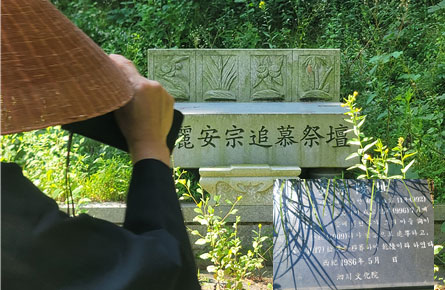
The tomb of Anjong is located at Guryongdong, with nearby places like Warungsan and Guryong-ri, which have unusual names such as Yong, Hyeol, Sa, Su, and Hyang, indicating a majestic atmosphere. Moreover, it is oriented towards the north. Did Wang Wook dream of becoming a dragon, carrying Wang Sun and returning to Gae-seong? Did he dream of being buried in this place? After waiting for thirteen years with his dream, he finally became a dragon himself and returned to Gae-seong after twenty-one years.
When Queen Heonjeong Hwangbo was a widow and living in Saka, she had a dream. In her dream, she climbed Mount Nam-san and saw that all the gates of Gae-seong were closed. She consulted a shaman to interpret her dream, and the shaman said, "You will give birth to a son, and he will become a king." However, Queen Sunjeong Hwangbo replied, "How can a widow give birth to a child? It will never happen." Yet, she later gave birth to Hyeonjong.
<hr>
<b>Introduction of Seol San Choi Jae-eun</b>
<hr>
Choi Jae-eun
Born in Namwon, Yongseong-bu, Gyeongju
Pen names: Seol San, Wontongsan-in, Cheongsa, Boryeomdangju, Baekryeonjuin, Gubongsanju, Jongnamsan-in, etc.
Current positions:
Director and chairman of the Hwandan Philosophy Research Institute (current)
Chairman of the Hwandan Mountain Happiness Our School (current)
Dedicated professor at the Lifelong Education Institute of Jeonbuk University (current)
He served as the president and chief of the struggle committee of the Law School Student Council at Jeonbuk University, dedicating himself to the democratization movement. At the age of 30, he received the support of the Baekwoo Seonin and founded the "Eastern Philosophy Research Institute" and opened the "Seolsan Philosophy Hall," publishing the magazine "Barun Sori Ojeun Sori Balgeun Sori" and embarking on the path of a fortune teller. Over a decade, he created the "Jaeil Gangsan South Korea Mingdangdo," and further organized and supplemented the national Mingdang map, revising it. Furthermore, he began to organize and write about the principles of Eastern geomancy, which are the essence of the three teachings of the East, over the years. In the year of the Year of the Dog, he climbed Baekdusan and saw the Golden Crow with three legs, and further witnessed the huge bladder emitted by Baekdusan. After witnessing the bladder transforming into the angry grandmother and sixteen grandchildren of Baekdusan, he returned and founded the Hwandan Philosophy Research Institute and finally published the "Wontong Great Compassion Sutra" (Volume 1).
Subsequently, he acquired the former Gubong Elementary School and established the Hwandan Happiness Our School Taehakdang, focusing on nurturing future generations and revising and supplementing the national Mingdang map. Furthermore, he has been actively engaged in lecture activities at various educational institutions and social organizations, including the Lifelong Education Institute at Jeonbuk University. He has authored numerous internal and external textbooks, including lectures on Seolsan geomancy and main actors, and has published dozens of books. He publishes an annual fortune-telling book and has climbed Baekdusan several times in the years of Imjin and Gapo. In the year of Bingshin, he climbed all the Five Mountains of China's Western An, including Taebaeksan and Oaek, and based on this, after fifty years of research and effort, he completed the "Ten Thousand Blessings and Virtues, the First Map of the World's Creation" (Hochon Kaebyeok Cheonha Jeildo). He began to write this result as the "Heavenly Sound and Earth Song" (Cheonyeomjiga).
Following this, in the year of Imjin, he published "The Secret of the Principles of Mingdang and the Reversal of Fortune" (Volumes 1 and 2). He is currently working on the sequel to Cheonyeomjiga and is also writing various books on celestial geography and human affairs. He has finally established the post-heaven Seolsan Cheonbugyeong as a guide to the post-heaven, based on the core of the pre-heaven text, and has revealed the One-Five-Seven Mysterious Degree to the world.
Major works: Wontong Great Compassion Sutra (Volume 1), The Secret of the Principles of Mingdang and the Reversal of Fortune (Volumes 1 and 2), internal and external educational textbooks and lecture books - Seolsan geomancy lecture book, Seolsan main actor lecture book, "Barun Sori Ojeun Sori Balgeun Sori," "Daewonjeonggak Cheonjihoetong," "Jamidusudo," "Seolsan Jamidusuhaje," "Bongseon," "Heavenly Sound and Earth Song," "Baekdusan Yejeonggi," "Taesan Nojeonggi," "Taebaeksan Nojeonggi," "The Land of Jeonju, the Left Taeguk, Pointed out by the Post-Heaven's Opening of the Land of Jeolla Province Jeonju," and various guidebooks and annual fortune-telling books published since 2017. He is currently engaged in education and writing for future works.
Appeared on Yeosu MBC broadcast
Appeared on TV broadcast New Year's Dialogue Program
Appeared on radio traffic broadcast for dream interpretation counseling and other broadcasting media.
Hwandan Philosophy Research Institute, Hwandan Happiness Our School
063-243-7246 010-3655-7252
? Summary:
A road has been built from Nenghwa Village to Baebangsa Temple, connected to the Buja Sangbong Road of Goryeo Hyeonjong. This village is where Goryeo Hyeonjong's father, Wang Wook, was exiled. The story involves Wang Wook's son Wang Sun, born from a secret relationship, who later became the eighth king of Goryeo. It explores Wang Wook's decision to be buried upside down and the subsequent rise of his son to power.
?️ Natural Korean Translation:
넹화마을에서 배방사로 이어지는 길이 건설되었는데, 이는 고려 현종의 아버지인 왕욱이 추방당한 곳이다. 왕욱의 비밀 관계로 태어난 아들 왕순이 이야기에 등장하며, 나중에 고려의 여덟 번째 왕이 되었다. 왕욱이 거꾸로 묻히기를 결정한 것과 그의 아들이 권력에 오르는 과정을 다룬다.
❓ Comprehension Questions:
1. What was the significance of Wang Wook's decision to be buried upside down?
왕욱이 묻혀지기를 거꾸로 한 결정에는 어떤 의미가 있었습니까?
2. Why was Wang Sun exiled to Sacheon before he was even born?
왕순이 태어나기도 전에 사천으로 추방된 이유는 무엇이었습니까?
3. How did Wang Sun eventually become the eighth king of Goryeo?
왕순은 어떻게 결국 고려의 여덟 번째 왕이 되었습니까?
? Vocabulary Learning:
1. exiled (추방당한, verb)
- forced to leave one's home country or area
- 고향이나 지역을 떠나도록 강제당한
- After the political unrest, the leader was exiled to a remote island.
- 정치적 불안으로 인해 지도자가 외딴 섬으로 추방당했습니다.
2. posthumous (사후의, adjective)
- occurring or published after one's death
- 사후에 발생하거나 출판된
- The posthumous novel by the author was released a year after his passing.
- 작가의 사후 소설은 그의 별세 후 1년 뒤에 발표되었습니다.
3. auspicious (길조의, adjective)
- conducive to success; favorable
- 성공적이거나 유리한
- The auspicious weather forecast brought a smile to everyone's face.
- 길조의 날씨 예보가 모두의 얼굴에 미소를 띄웠습니다.
4. geomancy (풍수지리, noun)
- the art of placing or arranging buildings or other sites auspiciously
- 건물이나 다른 장소를 길조롭게 배치하거나 정리하는 예술
- The ancient practice of geomancy is still used in modern architecture.
- 고대의 풍수지리 실천은 현대 건축에서도 사용됩니다.
5. dynasty (왕조, noun)
- a line of hereditary rulers of a country
- 국가의 유전적인 통치자들의 계보
- The Ming dynasty ruled China for nearly three centuries.
- 명나라는 중국을 거의 3세기 동안 다스렸습니다.

💬 댓글 (0)
댓글을 작성하려면 로그인이 필요합니다.
로그인첫 댓글을 작성해보세요!