
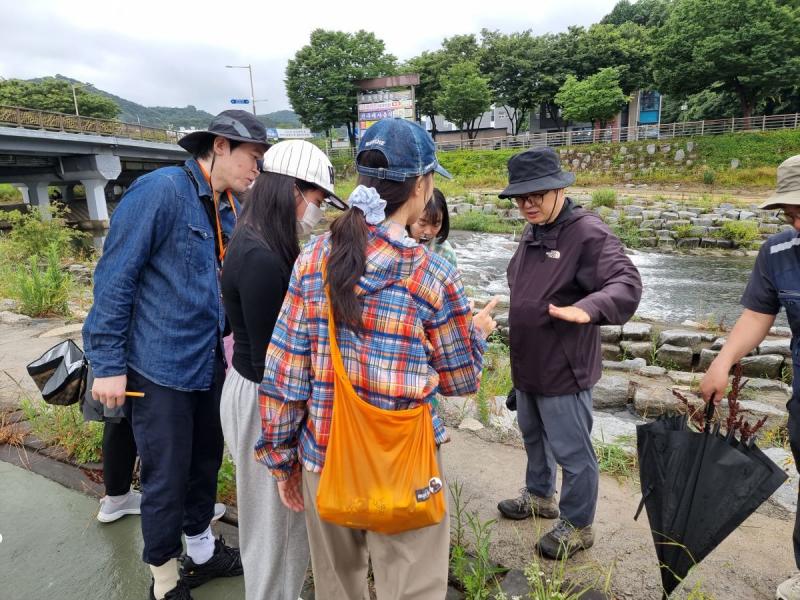
【전북교육신문】새롭게 출범하는 민선 9기 전주시정에서는 전주천과 삼천 등 도심 하천에 방치된 콘크리트 보를 철거하고 하천 생태계를 복원해야 한다는 주장이 제기됐다.
전북환경운동연합은 25일 성명서를 발표하고, "그동안 제 기능을 상실한 채 하천 생태계를 단절시키고 수질 오염을 유발해 온 콘크리트 보들을 전면 조사하고 즉각 철거해야 한다"고 촉구했다.
전북환경운동연합은 성명서에서 "보(洑)는 과거 농업용수 확보 등을 목적으로 설치되었으나, 도시화가 진행된 현재는 사용되지 않고 방치된 경우가 대부분"이라며, "이러한 콘크리트 구조물들이 물의 흐름을 가로막아 바닥에 퇴적물이 쌓이고 수질이 악화되는 주원인이 되고 있다"고 지적했다.
특히전북환경운동연합 하천 생태축의 단절 문제를 심각하게 제기했다. 보가 어류의 이동 경로를 차단해 전주천의 깃대종인 쉬리를 비롯한 다양한 수생생물의 서식 환경을 파괴하고 있다는 것이다. 이들은 "보를 철거하는 것만으로도 하천의 자정 능력이 회복되고 생물 다양성이 크게 향상된다는 점은 이미 국내외 여러 사례를 통해 증명됐다"고 강조했다.
Jeonbuk Environmental Movement Union Urges Removal of 'Abandoned Boats' in Jeonju City by the 9th Local Government
In the newly launched 9th local government of Jeonju, there is a call to dismantle concrete weirs left in urban rivers such as Jeonju Stream and Samcheon and restore the river ecosystems.
On the 25th, the Jeonbuk Environmental Movement Union released a statement, urging, "The concrete weirs that have lost their function, disrupted river ecosystems, and caused water pollution should be thoroughly investigated and immediately removed."
The Jeonbuk Environmental Movement Union stated in the announcement, "Weirs were originally installed for purposes such as securing agricultural water supply in the past, but now, with urbanization, they are mostly unused and neglected," and pointed out, "These concrete structures block the flow of water, causing sedimentation on the bottom and deteriorating water quality."
In particular, the Jeonbuk Environmental Movement Union raised serious concerns about the disruption of river ecosystems. They mentioned that weirs block the movement paths of fish, destroying the habitat of various aquatic organisms, including the endangered species like the shiri in Jeonju Stream. They emphasized, "Just by removing the weirs, the self-purification capacity of the river is restored, and biodiversity significantly improves, as proven by numerous domestic and international cases."
📝 Summary:
In Jeonju's 9th local government, there is a push to remove concrete weirs from urban rivers like Jeonju Stream and Samcheon to restore river ecosystems.
🗣️ Natural Korean Translation:
전주의 제9지방자치단체에서는 전주시내 시냇가와 삼천 등의 도시 강에서 콘크리트 댐을 철거하고 강 생태계를 복원하려는 노력이 있습니다.
❓ Comprehension Questions:
1. Why is there a call to remove concrete weirs in urban rivers like Jeonju Stream?
도시 강에서 콘크리트 댐을 철거해야 하는 이유는 무엇인가요?
2. What are some negative effects of concrete weirs on river ecosystems?
강 생태계에 미치는 콘크리트 댐의 부정적인 영향은 무엇인가요?
3. According to the Jeonbuk Environmental Movement Union, what happens when weirs are removed from rivers?
전북환경운동연합에 따르면, 강에서 댐이 제거되면 어떤 일이 일어날까요?
💡 Vocabulary Learning:
1. dismantle (철거하다) - verb
- To take apart a structure or system.
- 건축물이나 시스템을 분해하다.
- The old factory was dismantled to make way for a new shopping mall.
- 오래된 공장이 새 쇼핑몰을 위해 철거되었습니다.
2. neglected (방치된) - adjective
- Ignored or not taken care of.
- 무시되거나 관리되지 않은.
- The neglected garden was overgrown with weeds.
- 방치된 정원은 잡초로 덮여 있었습니다.
3. sedimentation (침전) - noun
- The process of settling or being deposited as sediment.
- 침전물로 침전되거나 침전되는 과정.
- The river's sedimentation was caused by the construction upstream.
- 강의 침전은 상류에서의 건설로 인해 발생했습니다.
4. disrupt (방해하다) - verb
- To interrupt or prevent something from continuing as usual.
- 무엇을 계속되는 것을 방해하거나 중단시키다.
- The loud noise disrupted the students' concentration during the exam.
- 시끄러운 소음이 시험 중 학생들의 집중력을 방해했습니다.
5. biodiversity (생물다양성) - noun
- The variety of plant and animal life in a particular habitat.
- 특정 서식지에서의 식물과 동물의 다양성.
- The rainforest is known for its high biodiversity.
- 이 비옥한 숲은 높은 생물다양성으로 유명합니다.
💬 댓글 (0)
댓글을 작성하려면 로그인이 필요합니다.
로그인첫 댓글을 작성해보세요!