♬ You did well today
Even if no one cares about your sadness
I always cheer you on, you did well today ♬
I came across a heartwarming picture book that reminded me of Okdal’s (Oksang Dalbit’s) song You Did Well Today.
Authors Kim Min-ji and Kim Nam-hee have released a magical picture book that gently asks how you’re doing and helps you comfort your own heart.
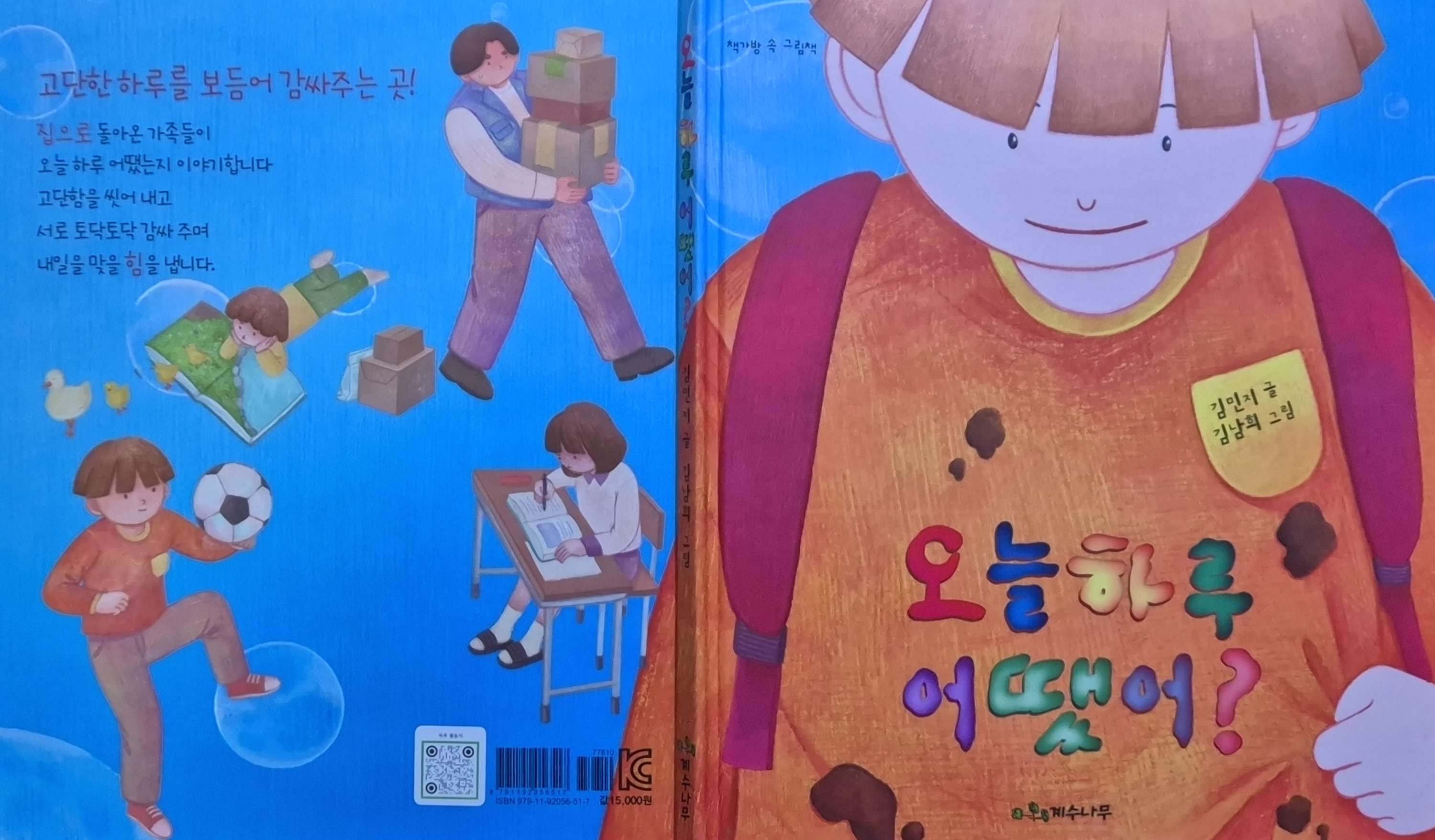
The cover illustration grabs your attention with Geon-i, wearing a backpack, clutching his stained orange t-shirt. Is Geon-i the one asking the question with his closed mouth? Or is he the one telling the story?
A picture book that asks about your day... I became curious about the kind of questions author Kim Min-ji, an elementary school teacher, would ask.
“How was your day?”
When you open both the front and back covers wide, you see the father carrying delivery boxes, the older sister studying, the younger sibling reading a picture book, and Geon-i playing soccer.
The blue background behind Geon-i contrasts with his clothes, and the soap bubbles floating through the air are only noticeable after finishing the book.
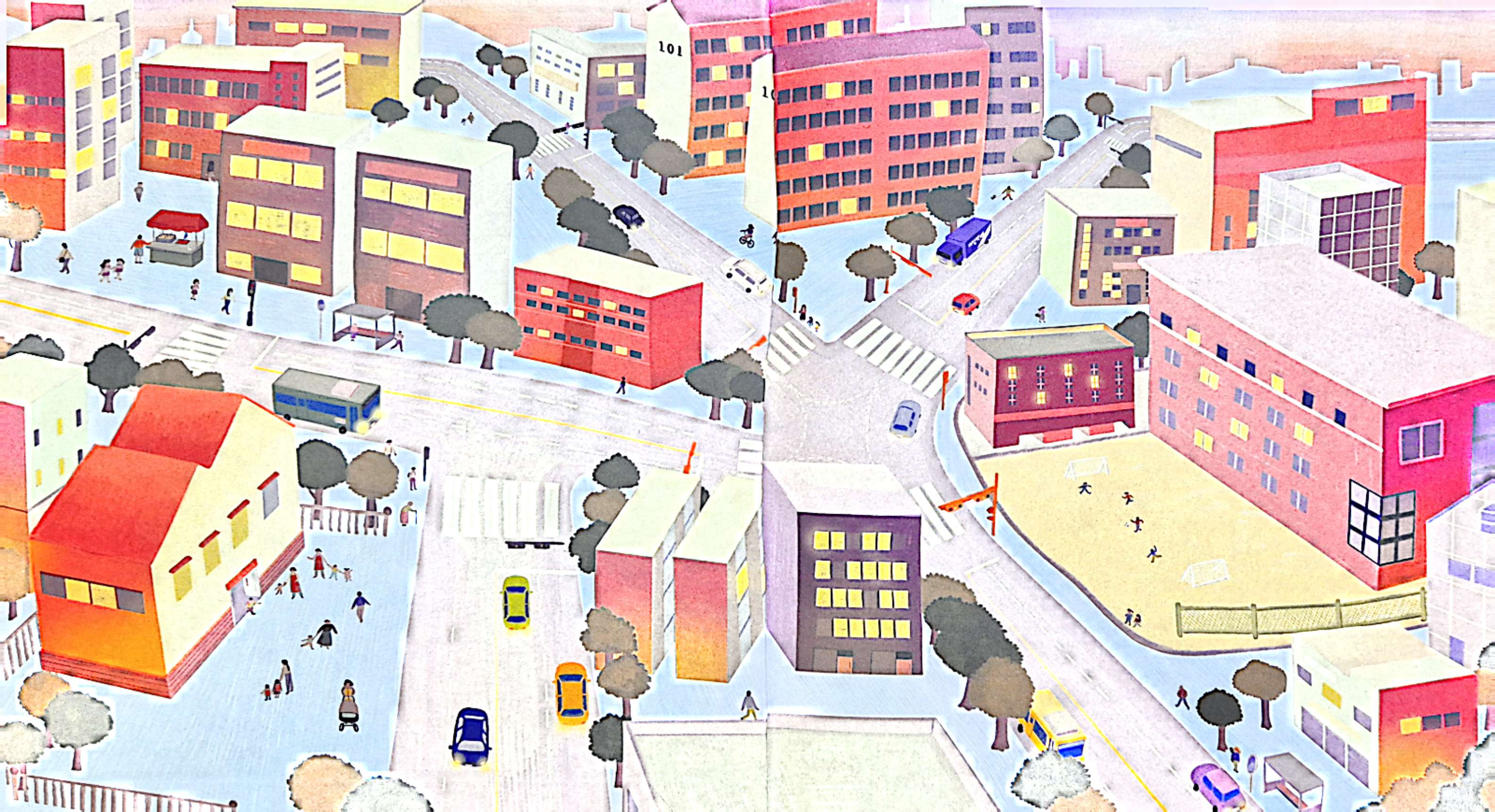
Opening the front endpaper, you see a cityscape dyed in the red hues of sunset. The entire city glows with red, giving the feeling that it’s time to head home.
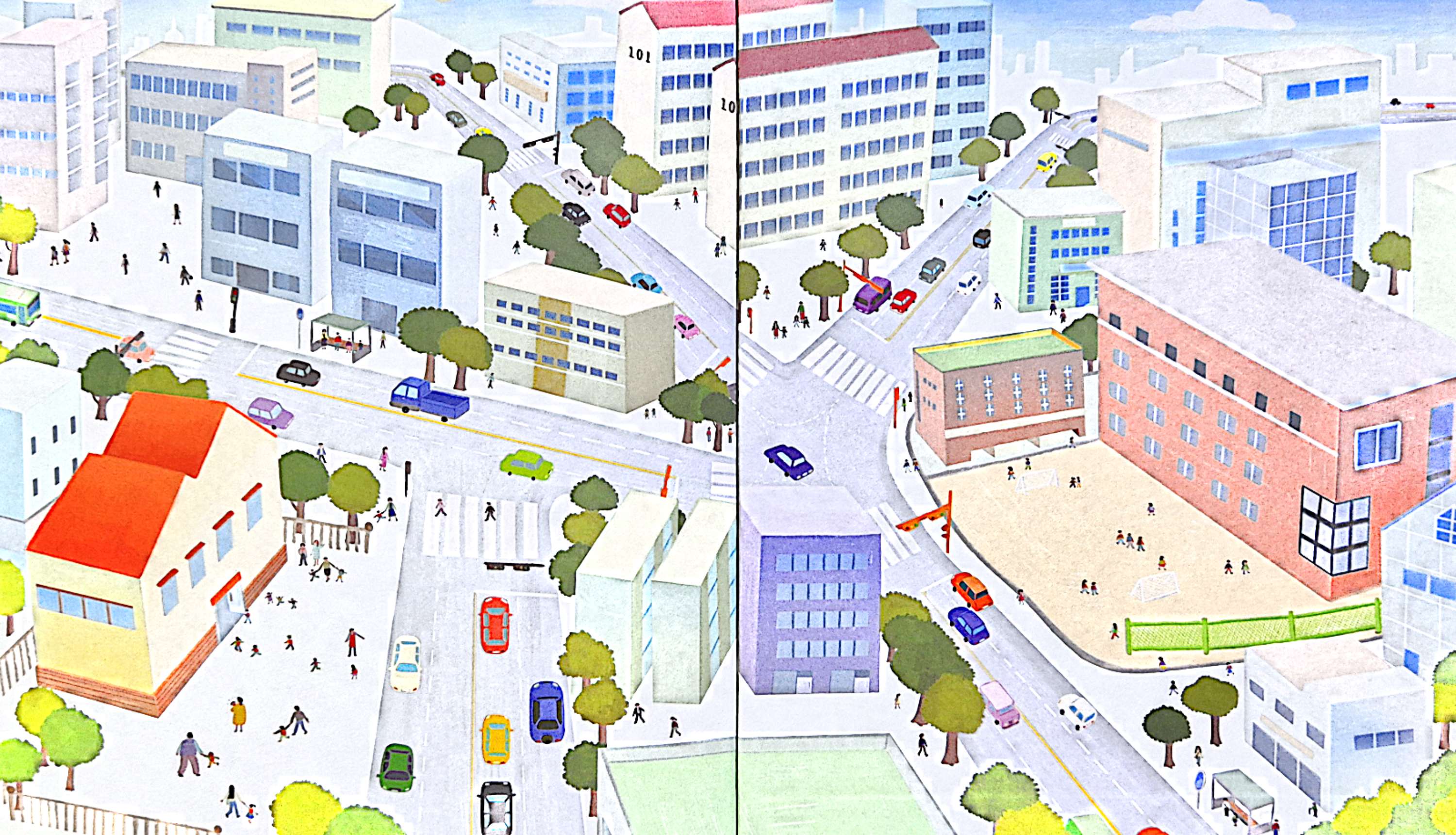
Curious about the back endpaper, I turned the page to find a lively morning with the sun rising in the distance.
There are many more vehicles on the road, and more children at the kindergarten and school playground.
If you look closely, you can find the younger sibling walking hand in hand with their father to kindergarten.
The contrast between the evening that wraps up the day and the morning that starts it anew beautifully conveys the feeling of being given the strength to live another day.
When the family returns home in the evening, the first thing they do is change their clothes.
The story unfolds in a unique structure where the washing machine asks each piece of clothing coming home how its day went.
What did you do at school?
Did you have fun?
How was your day?
Aren’t you tired?
Geon-i’s t-shirt, stained from playing soccer but scoring no goals, the younger sibling’s pants, wet from peeing at kindergarten, the father’s socks, worn after a day with no time to sit down, and the sister’s school uniform, worn while dozing off on the academy bus—all enter the washing machine.
At the scene where the father is doing the dishes, a question arises—where is mom?
That curiosity is answered as the washing machine begins to run.
Even when the whole family is asleep, the washing machine doesn’t start right away. It begins spinning early in the morning.
Wondering why it runs so early, I realized it might be out of consideration for the neighbors.
The washing machine that gently asks how each family member’s day was turns out to be the hands of the mother, soothing their hearts.
She hand-washes the family's weary hearts with waterfall-like water and draws out positive feelings with soap bubbles.
With the pounding motion of the wash, she taps each family member's shoulders as if to comfort them.
Behind the father, you can see the silhouette of the mother gently patting his back.
Just like how dirt washes off, the busy heart, worries about the future, the desire to win, and the frequent tears—those signs of a hard day—are all shaken off.
The fragrance pouch launched by the mother helps give strength to the family.
The scene where the family gathers to hang and fold laundry is heartwarming.
I found myself wishing their facial expressions were illustrated in more detail.
As the sun hangs high in the sky and the family leaves through the front door, a family photo and a drawing on the shoe cabinet show the mother’s presence.
When you return to the scene of the washing machine spinning, you realize it was the mother all along.
Children experience a wide range of emotions during their time at school. They may have fought with friends, felt frustrated, or suffered blows to their self-esteem.
The same applies to adults. After a tense and exhausting day, everyone longs for the comfort of home.
Reading How Was Your Day? with others who wait for that warmth can be healing.
Just like how a washing machine cleans the dirt from clothes, the story portrays how the mother soothes the family’s weary hearts and gives them strength to live again.
The mother’s heart and hands are the source of healing and encouragement, as you’ll come to realize while reading this book.
If the whole family reads How Was Your Day? together and shares their day while comforting one another, it will surely bring comfort.
The artist’s gentle-toned illustrations also help put your mind at ease.
The various sounds and motions of the spinning washing machine are delightfully expressed with playful onomatopoeia, making it fun to read aloud with children.
Being selected as a reviewer for the Picture Book Lovers Teachers' Group allowed me to write about How Was Your Day?—a picture book that brings happiness to both April and May.
? Summary:
How Was Your Day? is a picture book that uses the washing machine as a symbol to reflect on the traces and emotions of a long day. Like laundry after use, it encourages us to revisit, release, and reset our daily lives. Through this story, author Kim Min-ji reminds us how meaningful the simple question, “How was your day?” can be.
?️ Natural Korean Translation:
『오늘 하루 어땠어?』는 세탁기를 통해 하루의 흔적과 감정을 마주하게 해주는 그림책입니다. 더러워진 옷처럼 고단했던 하루도 돌아보고, 삶을 다시 정돈할 수 있는 힘을 전합니다. 김민지 작가는 이 책을 통해 “오늘 하루 어땠어?”라는 따뜻한 질문이 우리 삶에 얼마나 소중한지를 이야기합니다.
❓ Comprehension Questions:
1. What is the heartwarming picture book 'How Was Your Day Today' about?
가족의 일상을 어떤 시각으로 다루는지 설명해보세요.
2. What role does the washing machine play in the story?
이야기에서 세탁기는 어떤 역할을 하나요?
3. How does the book emphasize the importance of family love and support?
이 책은 어떻게 가족의 사랑과 지지의 중요성을 강조하나요?
? Vocabulary Learning:
1. heartwarming, 따뜻한, adjective
- Giving feelings of happiness and pleasure.
- 가족적인 따뜻한 감정을 주는.
- The heartwarming movie made everyone smile.
- 그 따뜻한 영화는 모두를 웃게 했다.
2. well-being, 삶의 질, noun
- The state of being comfortable, healthy, or happy.
- 편안하고 건강하며 행복한 상태.
- Yoga is good for improving your overall well-being.
- 요가는 총적인 삶의 질을 향상시키는 데 좋다.
3. comfort, 위로, noun
- A state of physical ease and freedom from pain or constraint.
- 신체적인 편안함과 고통이나 제약으로부터의 자유.
- A hug can provide great comfort in times of need.
- 꼭 안아주는 것은 필요할 때 큰 위로가 될 수 있다.
4. exhaustion, 피로, noun
- A state of extreme physical or mental fatigue.
- 극도의 신체적이거나 정신적인 피로 상태.
- After running a marathon, he felt a deep sense of exhaustion.
- 마라톤을 뛰고 나서, 그는 깊은 피로감을 느꼈다.
5. solace, 위안, noun
- Comfort or consolation in a time of distress or sadness.
- 고통이나 슬픔의 시기에 편안함이나 위로.
- Music can often provide solace during difficult times.
- 음악은 어려운 시기에 종종 위안을 줄 수 있다.

💬 댓글 (0)
댓글을 작성하려면 로그인이 필요합니다.
로그인첫 댓글을 작성해보세요!