A special exhibition has been prepared where visitors can catch a glimpse of the spirit of craftsmanship of the major holders of intangible cultural heritage in Jeonju, which holds the most intangible cultural heritage in South Korea.
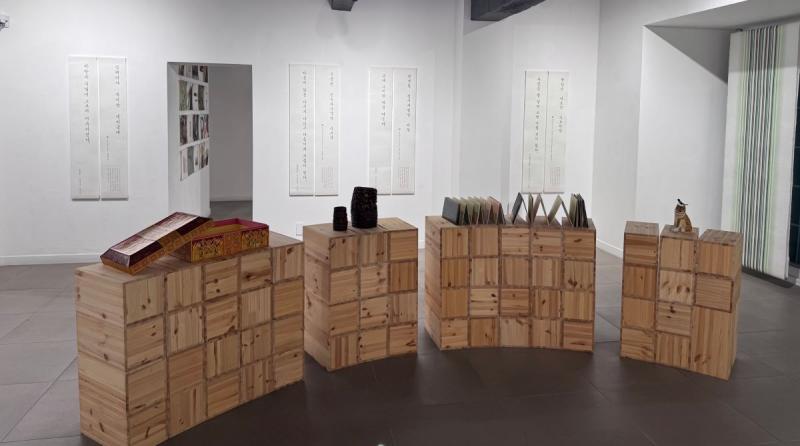
Starting from the 18th, Jeonju City will host the exhibition 'Baeknyeon-illo (百年一路)' at Hwahyeon Yangok House in Jeonju Hanok Village (67 Gyeonggijeon-gil, Wansan-gu) until October 25th, shedding light on the works and lives of the intangible cultural heritage holders in Jeollabuk-do.
The exhibition is divided into two parts, with 19 intangible cultural heritage holders participating to showcase works embodying traditional techniques and craftsmanship in each field.
The first part of the exhibition, running from the 18th to October 6th, will feature works by Kim Jong-yeon (folk wood carving), Kim Hye-mi-ja (dyeing), Park Gap-soon (bamboo weaving), Byun Gyeong-hwan (traditional Korean paper making), Shin Ae-ja (embroidery), Yeom Jae-soo (bamboo hat making), Lee Ui-sik (lacquerware), Lee Jong-deok (bamboo craft), Choi Dae-gyu (traditional Korean ceramics), and Choi Seong-il (bamboo weaving).
The second part of the exhibition, from October 9th to 25th, will showcase works by Kim Seon-ae (bamboo weaving), Kim Seon-ja (knotting), Kim Han-il (roof tile making), Park Gye-ho (bamboo hat making), Bang Hwa-seon (bamboo hat making), Shin Woo-soon (indigo dyeing), Lee Myeong-bok (pottery), Jo Jeong-hyeong (traditional liquor brewing), and Choi Byeong-yong (musical instrument making).
Especially in this exhibition, visitors can appreciate the delicacy and unique beauty of traditional crafts through various works such as 'Ten Scholar's Pencil Case' by Kim Jong-yeon, 'Two-Handled Moon Jar' by Kim Seon-ae, 'Jade Scented Incense Burner' by Kim Seon-ja, 'Iron Inkstone' by Shin Ae-ja, 'Natural Dyed Bamboo Hat' by Byun Gyeong-hwan, 'Yeonwol Line' by Bang Hwa-seon, and 'Geomungo' by Choi Byeong-yong.
The 'Baeknyeon-illo' event is part of Jeonju City's public event for intangible cultural heritage holders, introducing the lives and artistic worlds of craftsmen annually. Following the Jeolla Gamyeong and Eojin Museum, this year, various cultural spaces in Jeonju will share the value of traditional intangible cultural heritage with citizens, using Hwahyeon Yangok House as the stage.
The city plans to continue with performances by intangible cultural heritage performers and groups following the exhibition of the holders.
From November 11th to 12th, at the Hall of Masters in the Korean Sound Culture Hall, 22 performers and groups, including pansori, gayageum sanjo, poetry singing, songs, mask dance, Honam sanjo dance, Jeolla Samhyeonseungmu dance, Yeongsan Jakbeop, and Jeonju Gijeopnori, will showcase Jeonju's traditional arts.
Jeonju City's Director of Culture, Sports, and Tourism, Lee Seong-soon, said, "Through this event, we hope that citizens can feel the depth and beauty of Jeonju's intangible cultural heritage up close, and that the value of traditional culture will be passed on to the next generation."
📝 Brief Summary:
An exhibition in Jeonju, South Korea, showcases the works of intangible cultural heritage holders, highlighting traditional techniques and craftsmanship. Divided into two parts, the exhibition features various craftsmen and their unique creations, allowing visitors to appreciate the beauty of traditional crafts.
🗣️ Natural Korean Translation:
전주에서 특별 전시회가 열려지고 있습니다. 이 전시회에서는 무형문화재 주요 보유자들의 장인 정신을 엿볼 수 있으며 전통 기술과 장인정신을 강조합니다. 두 부분으로 나뉜 전시회는 다양한 장인과 그들의 독특한 작품을 소개하여 방문객들이 전통 공예의 아름다움을 감상할 수 있습니다.
❓ Comprehension Questions:
1. What is the name of the exhibition being held in Jeonju and where is it taking place?
전주에서 열리는 전시회의 이름은 무엇이며 어디에서 열리고 있습니까?
2. How many intangible cultural heritage holders are participating in the first part of the exhibition?
전시회 첫 부분에 참여하는 무형문화재 보유자는 몇 명인가요?
3. What is the purpose of the 'Baeknyeon-illo' event according to Jeonju City's Director of Culture, Sports, and Tourism?
전주시 문화체육관광국장에 따르면 '백년일로' 행사의 목적은 무엇인가요?
💡 Vocabulary Learning:
1. intangible (무형, adjective)
- unable to be touched or grasped; not having physical presence
- 물리적으로 만질 수 없거나 이해할 수 없는; 물리적인 존재를 갖지 않는
- Intangible cultural heritage is an important aspect of preserving traditions.
(무형문화재는 전통을 보존하는 중요한 측면입니다.)
2. craftsmanship (장인 정신, noun)
- skill in a particular craft or trade
- 특정 공예나 직업에 대한 기술
- The exhibition highlights the craftsmanship of traditional artisans.
(전시회는 전통 장인들의 장인 정신을 강조합니다.)
3. delicacy (섬세함, noun)
- fineness or intricacy of texture or structure
- 질감이나 구조의 섬세함 또는 정교함
- The artist's painting displayed a great delicacy in its details.
(작가의 그림은 세부사항에서 큰 섬세함을 나타냅니다.)
4. showcase (전시하다, verb)
- exhibit or display (someone or something) in an attractive or favorable way
- (누군가나 무언가를) 매력적이거나 유리하게 전시하거나 표시하다
- The museum will showcase rare artifacts from ancient civilizations.
(박물관은 고대 문명에서 나온 희귀한 유물을 전시할 것입니다.)
5. heritage (유산, noun)
- practices that are handed down from the past by tradition
- 전통적으로 과거로부터 전해지는 관행
- The country's cultural heritage includes traditional music and dance.
(그 나라의 문화 유산에는 전통 음악과 무용이 포함됩니다.)

💬 댓글 (0)
댓글을 작성하려면 로그인이 필요합니다.
로그인첫 댓글을 작성해보세요!