- Enhancing the Completeness of the Jeolla Inspection Program through the Use of 'Honam Ilgi'
A record has been revealed that indicates the significant influence of Buddhism in Jeolla Province, despite the Confucian policy of honoring Confucianism and suppressing Buddhism during the Joseon Dynasty.
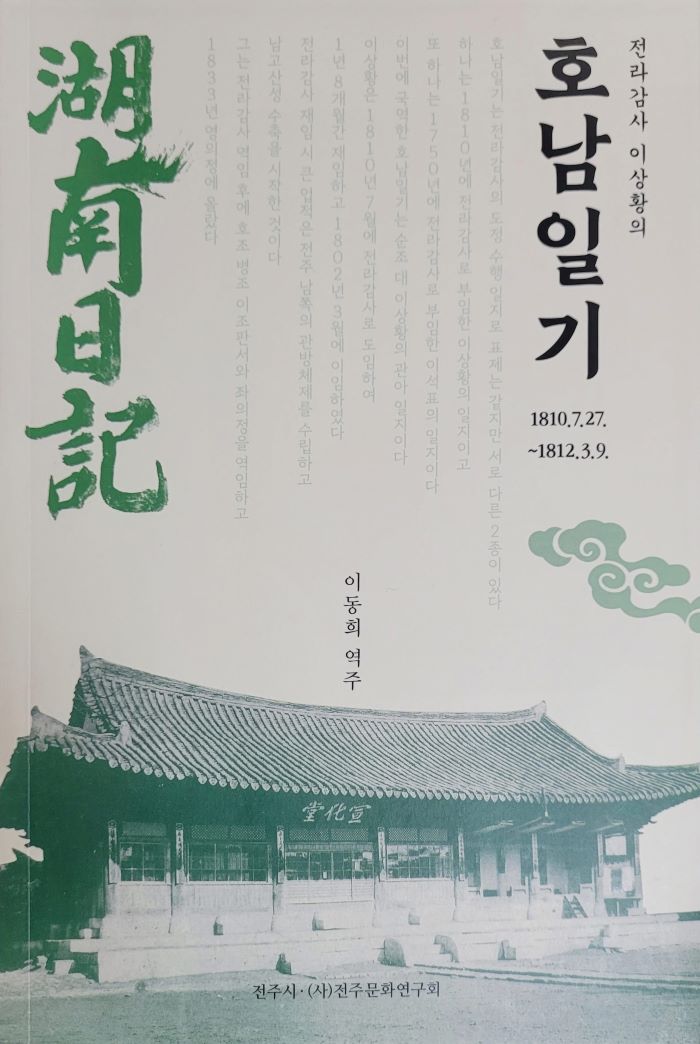
The diary 'Honam Ilgi' written by Yi Sang-hwang (1763-1841) during his tenure as the Jeolla Governor for a year and eight months from July 1810 (King Sunjo 10) to March 1812 has been translated and published.
According to an entry in the 'Honam Ilgi' dated April 8, 1811, Yi Sang-hwang rode a sedan chair in the evening to Mount Omok to observe the ceremonial lantern lighting event, where he enjoyed music, conversed with officials, and returned to the inspection office late at night. This signifies the participation of the Jeolla Governor in the ceremonial lantern lighting event at Mount Omok on the day of Buddha's arrival.
Lee Dong-hee, the head of the Jeonju Cultural Research Institute (former director of the Jeonju History Museum), who was in charge of the translation, stated, "Despite the official Confucian policy of the Joseon era, Buddhism still held influence among the public, which could explain why the Jeolla Governor attended the ceremonial lantern lighting event."
He further mentioned that the observation of the Jeolla Governor at the lantern lighting event not only has religious significance but also holds noteworthy records related to the cultural content of Jeonju Hanok Village.
Additionally, the 'Honam Ilgi' includes brief but vivid descriptions of the actual practices of the Jeolla Inspection, such as incidents where the governor punished officials for mistakes, the rituals and procedures of the Wangkwallye (a ritual where local officials pay respects to the royal palace), the items presented as tribute, the process of presenting the tribute, the ritual of local officials informing the inspection, and the composition of the inspection procession.
Yi Sang-hwang, a descendant of Prince Hyoryeong, passed the civil service examination and rose through the ranks to become a high-ranking official, serving as a secretary in the royal office and later appointed as the Jeolla Governor. He held positions such as Daesahoen (chief state councilor) and Ijopanseo (chief of the Board of Personnel) before eventually reaching the position of Yeonguijeong (Minister of Justice).
He was known to carry out administrative duties daily without official holidays, handling matters even during major holidays like Lunar New Year and Chuseok, only taking breaks when he was ill.
Jeonju City plans to utilize the recently published 'Honam Ilgi' to enhance the authenticity of programs related to the revitalization of the Jeolla Inspection. They also aim to lead the development of rich cultural content by creating content based on the book's contents.
Noh Eun-young, Director of the Department of Culture, Sports, and Tourism, stated, "This translation will be used as foundational material for the revitalization of the Jeolla Inspection," adding, "Through this, we hope that the Jeolla Inspection will be filled with diverse and abundant cultural content, becoming a cornerstone of cultural cultivation in Jeonju City."
? Summary:
The 'Honam Ilgi' diary by Yi Sang-hwang sheds light on the influence of Buddhism in Jeolla Province despite Confucian policies during the Joseon Dynasty. It reveals the Jeolla Governor's participation in the ceremonial lantern lighting event at Mount Omok, showcasing the cultural significance of the region.
?️ Korean Translation:
'호남일기'는 조선 시대에 고려되었던 유교 정책에도 불구하고 전라도에서 불교의 영향력을 보여줍니다. 이것은 전라도 지사가 오목산에서 열리는 제례 등에서 참여했음을 나타내며, 이는 그 지역의 문화적 중요성을 보여줍니다.
❓ Comprehension Questions:
1. What was Yi Sang-hwang's role during his time as the Jeolla Governor?
Jeolla 지사로 임기를 보낸 이상황의 역할은 무엇이었습니까?
2. How did the 'Honam Ilgi' shed light on the cultural practices of Jeolla Inspection?
'호남일기'가 전라 검사의 문화적 관행을 어떻게 밝혔습니까?
3. Why did Lee Dong-hee mention the significance of the lantern lighting event in the 'Honam Ilgi'?
이동희가 '호남일기'에서 제례 등의 중요성을 언급한 이유는 무엇입니까?
? Vocabulary Learning:
1. authenticity, 진정성, noun
The authenticity of historical artifacts is crucial for accurate representation.
역사적 유물의 진정성은 정확한 표현을 위해 중요합니다.
2. revitalization, 활성화, noun
The government invested in the revitalization of the downtown area to attract more visitors.
정부는 더 많은 방문객을 유치하기 위해 시내 지역의 활성화에 투자했습니다.
3. procession, 행렬, noun
The royal procession through the city was a grand spectacle.
도시를 통해 행진하는 왕실 행렬은 웅장한 광경이었습니다.
4. descendant, 자손, noun
She is a descendant of a famous historical figure.
그녀는 유명한 역사적 인물의 자손입니다.
5. influential, 영향력 있는, adjective
His influential speeches inspired many people to take action.
그의 영향력 있는 연설은 많은 사람들에게 행동을 취하도록 영감을 주었습니다.

💬 댓글 (0)
댓글을 작성하려면 로그인이 필요합니다.
로그인첫 댓글을 작성해보세요!