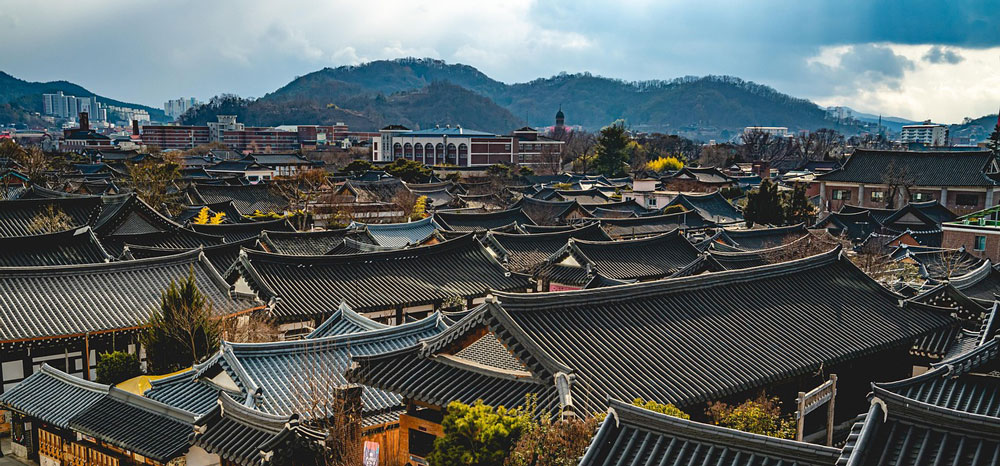
[Column by Je-eun Choi on Seolsan] The energy of heaven and earth acts in accordance with the appropriate time and place
...
Editor(2026-03-10 00:20:16)
[Editor's Note]
Jinmuk Josah (震黙祖師, 1562~1633) is considered the top among the 16 Buddhist monks in the Joseon Dynasty, known as the first in supernatural powers. His Dharma name was Irok (一玉), and a stupa remains at Bongseosa in Wanju Seobangsan. It is said that he left a prophecy, "When my stupa becomes bright, know that the afterlife is opening, and be aware that the Ten Kings are descending." The author of this article uses this as religious evidence of Jeonju Wanggi-ron, built upon history, geography, and divination, and also utilizes the device of connecting the name "Segan Yuirok (世間唯一玉)" appearing in the poem with Jinmuk's Dharma name Irok, symbolizing Jeonju's land.
Jeonju, the land of Taebin (胎牝), embraces the Wanggi of Wanju, announcing the emergence of seven royal dynasties with Wansan Chilbong and predicting the emergence of eight royal dynasties with Jeonju. Wanju, which has secured the emergence of ten royal dynasties, is unfolding. The stupa of Jinmuk Josah, the first in supernatural powers, is becoming bright.
Firstly, Jeonju is a land of abundance.
The highest house in Jeonju, called Gaeksa (客舍), is named Pungpaejigwan (豊沛之官). This signifies that the birthplace of King Gojo Yubang, who founded the Han dynasty, was Pung (豊) and the place he grew up was Pae (沛), thus Pungpae (豊沛) refers to the birthplace of the king who founded the nation. Although this name signifies that the hometown of King Taejo Yi Seong-gye, who founded the Joseon Dynasty, is Jeonju, in terms of geomancy, it means the land where kings who will establish a new country, symbolized by the Wanggi where the king will be born, will emerge one after another. Therefore, Jeonju's east gate is named Wando Gate (完東門), the south gate is named Pungnam Gate (豐南門), the west gate is named Paeseo Gate (沛西門), and the north gate is named Gongbuk Gate (拱北門). Even now, the south gate, also known as the Honam First Gate (湖南第一門), Pungnam Gate, remains, proving these historical facts.
Secondly, each peak of Wansan Chilbong (完山七峰) encompasses seven Wanggi.
Furthermore, to the south of Jeonju lies Wansan Chilbong, where each peak is said to encompass a Wanggi, signifying that seven royal dynasties will rise in Jeonju. As mentioned earlier, Wansan Chilbong consists of Inner Chilbong (內七峰) and Outer Chilbong (外七峰), making it actually thirteen peaks. Therefore, it is sometimes referred to as thirteen, not seven. To prove this legend, it is said that Yi Seong-gye, the 22nd descendant of the founder of the Yi family, established the Joseon Dynasty, producing 27 kings over 519 years. It is presumed that the tomb of Yi Han, who obtained the land of 28 generations of kings (二十八代君王之地), is located in Deokjindong, Jeonju. Furthermore, Chun Doo-hwan, who seized power in a military coup, briefly referred to himself as Wansan Jeonshi (完山全氏), embodying one person who embraced the Wanggi of Jeonju. Additionally, the Jeonju Kim family (全州金氏), who continued the three-generation Kim dynasty of Kim Il-sung (조), Kim Jong-il (부), and Kim Jong-un (자), is also said to have inherited the royal aura of Jeonju Wanju. Thus, Jeonju signifies the foundation of creation and establishment by the founding ancestors. Even if, as some say, only three royal dynasties emerged, at least four royal dynasties are said to remain. Or rather, since twelve peaks remain, it is said that twelve royal dynasties will emerge. In reality, it is likely that the Chun Doo-hwan military regime or the hereditary North Korean regime may be exceptions. Therefore, it implies that at least six royal dynasties and possibly up to twelve royal dynasties will emerge from the land of Taebin.
Thirdly, when analyzing Jeonju (全州), it signifies eight (八) + king (王).
Interpreting the name Jeonju directly implies that eight kings will emerge in the city. When analyzing Jeonju in Chinese characters, it signifies eight (八) + king (王). Hence, it means a place where kings will gather together, indicating that eight royal dynasties will rise in the land. This interpretation is also done as follows:
Jeonju (全州) = eight (八) + king (王)
Jeonju (全州) = person (人) + king (王)
Jeonju (全州) = enter (入) + king (王)
Combining eight kings, kings of people, and entering kings implies that this is where the post-heaven era, centered around human kings, will begin, and where the eight post-heaven eras or eight epochs will unfold, as indicated by the true land left by the true god who governs all directions of the world. Isn't it truly remarkable? Although the pre-heaven era gave birth to the Joseon Yi family, the name Jeonju engraves the intention left by the heavens to complete the post-heaven era of democracy and human-centered civilization here. Now, shouldn't we seek the eight places of enlightenment and creation left by heaven? Therefore, let's open the door of heaven and earth, understand the dual use of Kan and Li, and seek the foundation of the sun and moon and the advancement and retreat of heaven's symbols.
Fourthly, lastly, the complete Jeonju (全州) and the perfect Wanju (完州) exemplify the perfect number ten (十). Therefore, Jeonju Wanju is the land of the Ten Kings (十王之地). It is the foundation where ten royal dynasties will emerge or the greatest seat of the Ten Kings, who oversee all directions and three worlds.
The first perfect number is ten (十). Furthermore, adding ten to ten results in one hundred (百). Continuing this pattern leads to one thousand, ten thousand, hundred million, trillion, quadrillion, quintillion, and so on, reaching an infinite number (千,萬,億,兆,京,....無限大數). Ten (十), hundred (百), and thousand (千) have passed two thousand years and are now entering a new millennium, the two thousandth year, which is the twenty-fifth year of the Bingwu year. The position of ten (十) is now opening. The living and deceased voices of the phoenix's nest on Seobangsan have been heard, and Jinmuk Josah, the first in supernatural powers among the sixteen ancestors, ascended the stupa named Irok to say, "When my stupa becomes bright, know that the afterlife is opening, and be aware that the Ten Kings are descending." and then entered Nirvana. However, his stupa has been becoming bright since then. Currently, the energy of Jeonju is returning. No, the energy of Jeonju is finally filling up. Jinmuk Josah, the first in supernatural powers among the sixteen ancestors, with the stupa named Irok, is proving this.
Wild snow fills the sky and earth,
The dark sky remains silent,
Between the snow-covered mountains and water, a small hut stands,
In the world, there is only one jade.